
This is not just another temple on Tirupati’s long list of religious sites. It is a natural waterfall, a centuries-old Shiva temple, and one of the most serene spots in the entire region — all rolled into one. Whether you’re a devout pilgrim, a curious traveller, or someone who just loves the sound of falling water in the middle of ancient stone, Kapila Theertham deserves a place on your itinerary.
What Is Kapila Theertham?
Kapila Theertham is a sacred theertham (holy water body) located at the foot of Tirumala, around 5 km from Tirupati town in Andhra Pradesh. At its heart is a naturally occurring waterfall that cascades directly from the Tirumala Hills and flows into a tank considered holy by both Shaivites and Vaishnavites.
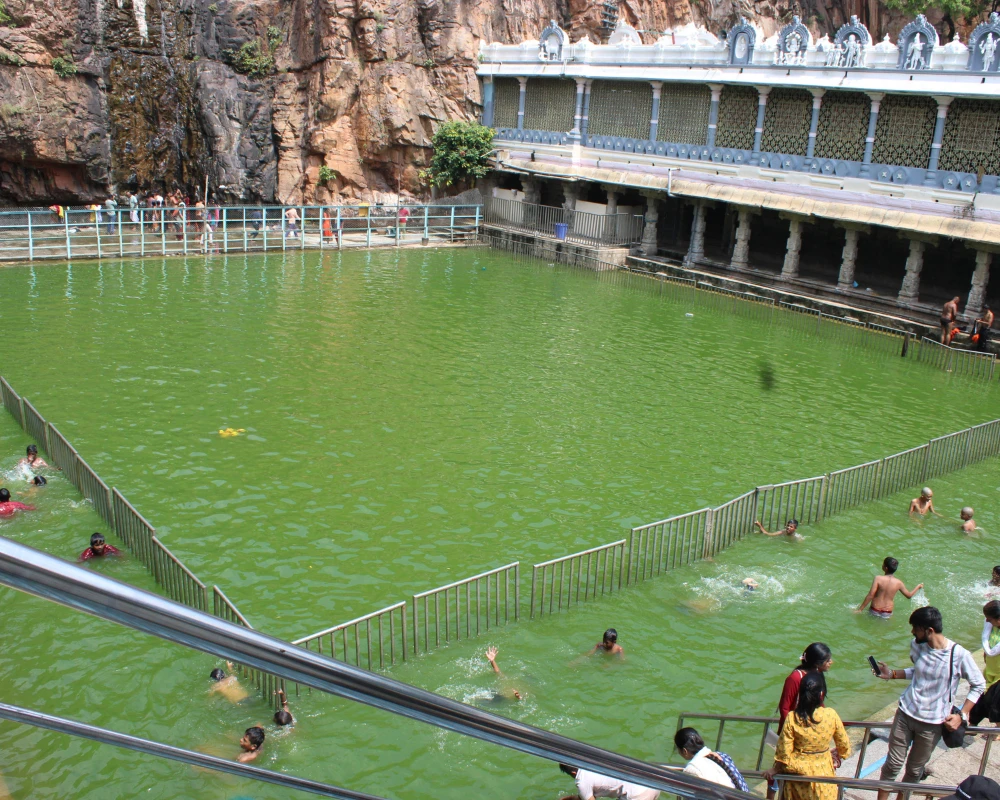
Kapila Theertham
The presiding deity here is Lord Shiva, worshipped in the form of Kapileshwara Swamy. This is notable because Kapila Theertham is considered the only Shiva temple within the Tirumala-Tirupati Devasthanam (TTD) jurisdiction — making it quite unique in a region otherwise deeply associated with Lord Vishnu.
The waterfall is not artificial. It originates from a stream flowing down the Seshachalam forest range and gains intensity during and after the monsoon season, making the site even more picturesque between July and October.
The Legend Behind Kapila Theertham
Like most sacred sites in India, Kapila Theertham is steeped in mythology. According to local tradition, this is the place where the great sage Kapila Muni — an incarnation of Lord Vishnu — performed intense penance and meditation. It is believed that Lord Shiva himself appeared here to bless the sage, and the waterfall marks the very spot of that divine encounter.
Another significant legend connects this site to Brahma Hatti Dosha — the sin of Brahminicide. According to the Puranas, Lord Shiva once killed Brahma’s fifth head in a moment of rage and was cursed with this dosha. He is said to have meditated here at Kapila Theertham to seek purification, and the waters of this theertham cleansed him of that sin.
This is precisely why a bath in the waters of Kapila Theertham is considered highly auspicious — it is believed to wash away sins and grant moksha, spiritual liberation.
Religious Significance
The religious importance of Kapila Theertham runs deep, and it is woven into the broader pilgrimage circuit of Tirupati. Many devotees believe that a visit to Lord Venkateswara at Tirumala is incomplete without taking a holy dip at Kapila Theertham.
A few things make this spot spiritually distinct:
- Trilinga Kshetra connection: Tirupati falls within the Trilinga Kshetra — one of the most sacred regions for Shaivites in Andhra Pradesh. Kapila Theertham is considered one of the key Shiva pilgrimage points within this kshetra.
- Brahma Hatti Dosha Nivarana: Taking a bath here is specifically associated with cleansing the severe sin of Brahma Hatti Dosha, something rarely attributed to other theerthams.
- Pushkarini and Theertham: The temple has a sacred tank (pushkarini) where pilgrims take a ritual bath before entering the sanctum sanctorum. The tank receives water from the natural waterfall, adding to its sanctity.
- Pradosham celebrations: The temple comes alive during Pradosham, a bi-monthly observance dedicated to Lord Shiva. Devotees gather in large numbers on these days for special pujas and abhishekas.
Architecture and Temple Layout
The Kapila Theertham temple follows the Dravidian style of architecture, though it is modest in size compared to the grand gopurams of larger South Indian temples. What it lacks in scale, it more than makes up for in atmosphere.
As you approach the temple, the sound of the waterfall greets you before you even see it. A stone stairway leads down to the bathing ghats and the holy tank. The main sanctum houses the Shivalinga of Kapileshwara Swamy, and the idol of Goddess Kapilambal (Parvati) is enshrined in a separate shrine within the same complex.
The temple premises are relatively compact, and the entire visit including a bath and darshan can be completed in about an hour. The natural greenery of the Tirumala forest surrounding the site adds a layer of tranquillity that is hard to find anywhere else in the bustling Tirupati region.
Best Time to Visit Kapila Theertham
Kapila Theertham is worth visiting at any time of the year, but the experience changes significantly with the season.
Monsoon (July – October): This is when Kapila Theertham is at its absolute best. The waterfall swells with rainwater flowing down from the Tirumala Hills, creating a powerful and visually stunning cascade. The surrounding greenery is lush, and the air is fresh. If you can time your Tirupati trip during this season, the sight of the waterfall in full flow is genuinely breathtaking.
Winter (November – February): This is the most comfortable time to visit in terms of weather. The waterfall is still flowing at a decent level, the crowds at Tirupati are manageable, and the cool mornings make the outdoor bathing experience pleasant rather than bracing.
Summer (March – June): The waterfall may reduce to a trickle, and the heat can make outdoor visits tiring. However, the temple itself remains open and fully functional, and early morning visits are still peaceful.
Temple Timings and Entry
Temple Opening Hours: Generally 6:00 AM to 1:00 PM and 3:00 PM to 8:00 PM (subject to change on festival days — always verify before your visit).
Entry: Free of charge. There are no tickets required to enter Kapila Theertham or take a bath in the holy tank.
Dress Code: Modest traditional attire is recommended. Men are expected to remove their shirts before entering the inner sanctum in many South Indian temples — the same applies here.
How to Reach Kapila Theertham
Getting to Kapila Theertham is straightforward since it is located within Tirupati town limits.
By Road: The temple is about 5 km from Tirupati Railway Station and is well connected by local auto-rickshaws and taxis. It sits at the base of the Tirumala ghat road, making it easy to combine with a Tirumala visit on the same day.
From Tirumala: If you are descending from Tirumala by road, ask your driver to stop at Kapila Theertham before heading back into town — it is conveniently located right at the foot of the ghat.
By Bus: Local APSRTC buses from Tirupati bus stand service routes near Kapila Theertham. Auto-rickshaws are plentiful and the most convenient last-mile option.
By Air: Tirupati Airport (IATA: TIR) is approximately 15 km away and has direct flights from several major Indian cities.
Nearby Attractions
Since Kapila Theertham is close to the base of Tirumala, it pairs well with several other sightseeing spots in the area:
- Sri Govindarajaswamy Temple – One of the most important Vaishnava temples in Tirupati town, dedicated to Lord Vishnu.
- Srikalahasti Temple – About 36 km from Tirupati, this is another legendary Shiva temple known for Rahu-Ketu puja and stunning Dravidian architecture.
- Chandragiri Fort – A historic fort about 11 km from Tirupati with excellent views and a museum chronicling the Vijayanagara Empire.
- Silathoranam – A rare natural arch formation on the Tirumala Hills, formed over millions of years, listed as a geological monument by the Geological Survey of India.
- Akasaganga Theertham – Another sacred waterfall on the Tirumala Hills, believed to originate from Lord Venkateswara’s feet.
Tips for Visiting Kapila Theertham
A few practical pointers to make your visit smooth:
- Carry a change of clothes if you plan to take a dip in the holy tank — wet clothes and a long drive back are never a great combination.
- Visit early in the morning for the best experience. The light through the surrounding trees, the cool air, and the relative calm before the midday crowds make it worth the early start.
- Fridays and Pradosham days see larger crowds. If you prefer a quieter darshan, pick a Tuesday or Wednesday morning.
- Photography is generally allowed in the outdoor areas, but be respectful near the sanctum and the bathing ghats.
- If you’re arranging a Tirupati pilgrimage package, ask your tour operator to include Kapila Theertham — it adds very little travel time but a great deal of spiritual and experiential value.
Plan Your Tirupati Trip with Vishnu Travels
At Vishnu Travels, we specialise in crafting seamless, comfortable pilgrimage and sightseeing packages to Tirupati and across Andhra Pradesh and Telangana. Whether you’re planning a quick weekend darshan or a multi-day devotional tour, we ensure your journey is well-planned, well-timed, and completely stress-free.
Our Tirupati packages include convenient pickup from Hyderabad, Vijayawada, Chennai, and other major cities, with expert drivers who know the routes and the timings inside out. We make sure you don’t miss places like Kapila Theertham that most generic itineraries overlook.
Get in touch with us:
Final Thoughts
Kapila Theertham is the kind of place that quietly stays with you long after the visit. There’s nothing loud or commercial about it — just a natural waterfall, an ancient Shiva temple, and the feeling that this spot has been drawing seekers for a very, very long time. In a pilgrimage town that can sometimes feel overwhelming with crowds and queues, Kapila Theertham offers a moment of genuine stillness.